Blog Summary
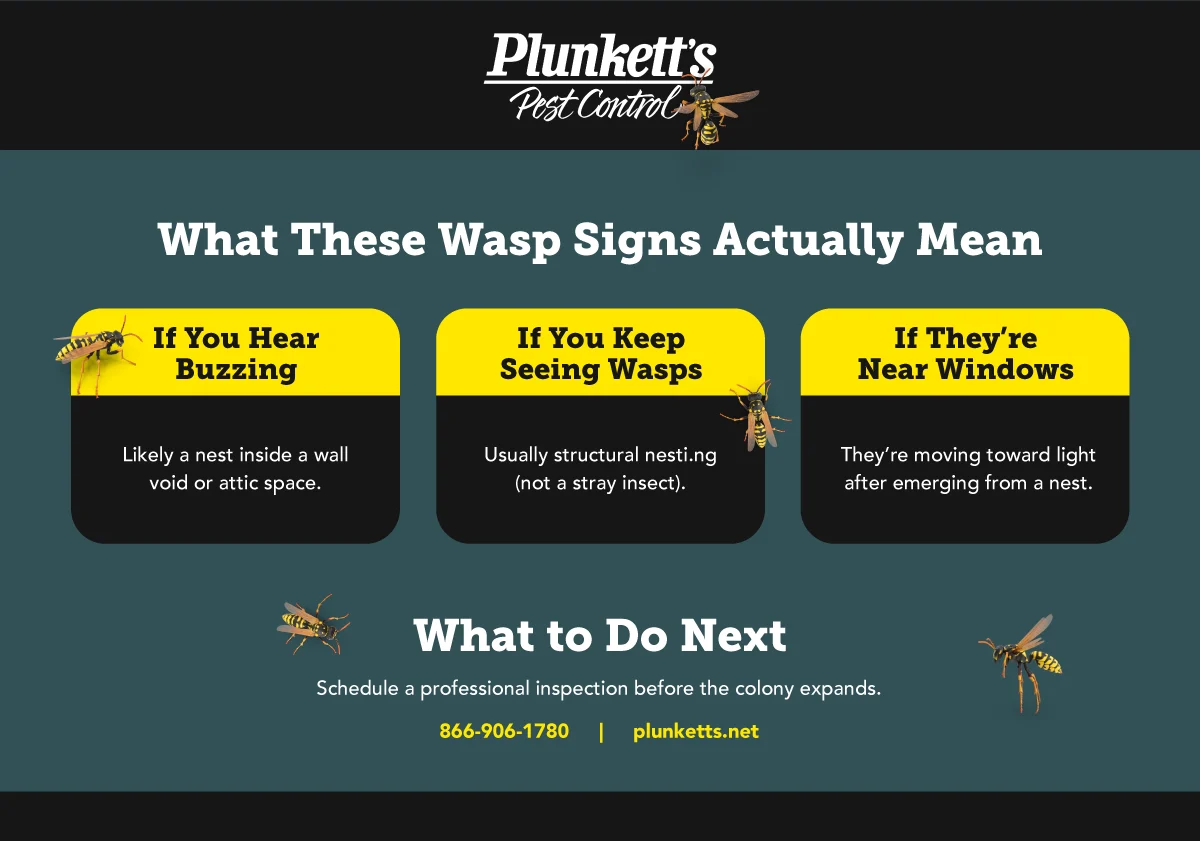
True wasp activity in your home is different from a stray visitor. Signs of an active nest include:
- Buzzing inside walls or ceilings, especially at consistent times of day
- Increasing activity from early to late summer
- Visible entry traffic near rooflines or vents
Don't seal the entry point while wasps are active — trapped wasps will find another way in.
If you keep finding wasps inside your house, you’re usually dealing with one of two situations:
- A nest is inside your structure
- A nest is directly attached to the exterior and they’ve found a way in
Here’s how to tell what you’re dealing with, and what to do next.
A Stray Wasp vs. an Infestation
A stray wasp:
- Appears once
- Leaves or dies quickly
- Does not make a repeat appearance in the same area
If one wasp is flying inside your home, stay calm, close interior doors, turn off room lights, open one window slightly, and allow the wasp to move toward the light.
An Infestation:
- Involves repeated sightings
- Happens in the same location
- Coincides with buzzing or exterior flight patterns
.jpg?r=ez46VBrkeG4=)
Dealing with a true infestation is very different from handling a single stray wasp. The first step is determining exactly where the activity is coming from:
Do You Hear Buzzing in the Walls? Here’s What It Means
Buzzing inside drywall or ceilings almost always indicates nesting in a wall void or attic space. Wasps prefer:
- Insulated cavities
- Protected rooflines
- Warm attic corners
- Gaps behind siding
Important: do not seal the wall or entry point while activity is ongoing. Trapped wasps will find another way out, often into your living space.
More Signs of Wasps Are Living in Your Walls
Other than buzzing that stops at night and resumes during the day, you’ll also notice:
- Wasps entering a single gap repeatedly
- Activity concentrated on one side of the home
- Indoor sightings that increase over time
Wall nests expand as the colony grows. What starts as minor activity in early summer can escalate quickly by late summer.
.jpg?r=Wpypw+d+B8o=)
If You Keep Finding Wasps Near Windows
Wasps inside homes often collect at windows because they’re trying to escape toward light. This usually means:
- They emerged from a hidden nest
- They are navigating inside wall cavities
- The entry point is above the window or in the attic
If sightings are happening repeatedly in the same room, focus your attention above that space, especially ceiling fixtures and vents.
.png?r=ZH9fKRS+y/k=)
Why Do I Keep Finding Wasps in My House?
Wasps are attracted to nearby food sources like trash, fallen fruit, and outdoor dining areas. They also seek sheltered nesting locations such as attics, wall voids, rooflines, and gaps behind siding. If they have both access and a protected space, activity inside your home is likely to continue until the source is addressed.
To prevent a wasp infestation, keep outdoor trash sealed, clean up food spills promptly, and avoid leaving pet food or sugary drinks outside, as these attract foraging wasps. Regularly inspect and seal small gaps around rooflines, vents, and siding to prevent queens from finding protected nesting spaces.
If prevention is too late, and you’re dealing with an infestation, don’t attempt to resolve it on your own. Not only does this put you at risk for stings, but it is also unlikely to eliminate the colony completely. For example, spraying aerosol products into walls can scatter the colony, drive wasps deeper into the structure, and increase indoor emergence.
How Wasp Infestations Are Actually Eliminated
Plunkett’s pest control technicians are trained on how to quickly and effectively rid your space of wasps. Here’s how:
- Identify the nest location
- Treat the colony directly
- Monitor post-treatment activity
- Address structural entry points
Solve Your Wasp Problem With Plunkett’s
Give us a call if you hear buzzing in walls, wasps are appearing multiple days in a row, or you see exterior entry traffic, and especially if somebody in your home is allergic or sensitive to stings. Don’t wait for a small issue to turn into a full infestation. Contact Plunkett’s today and let our experienced technicians eliminate the problem at its source.