Blog Summary
Wasp infestations rarely start with an obvious nest — they begin with subtle clues. Watch for:
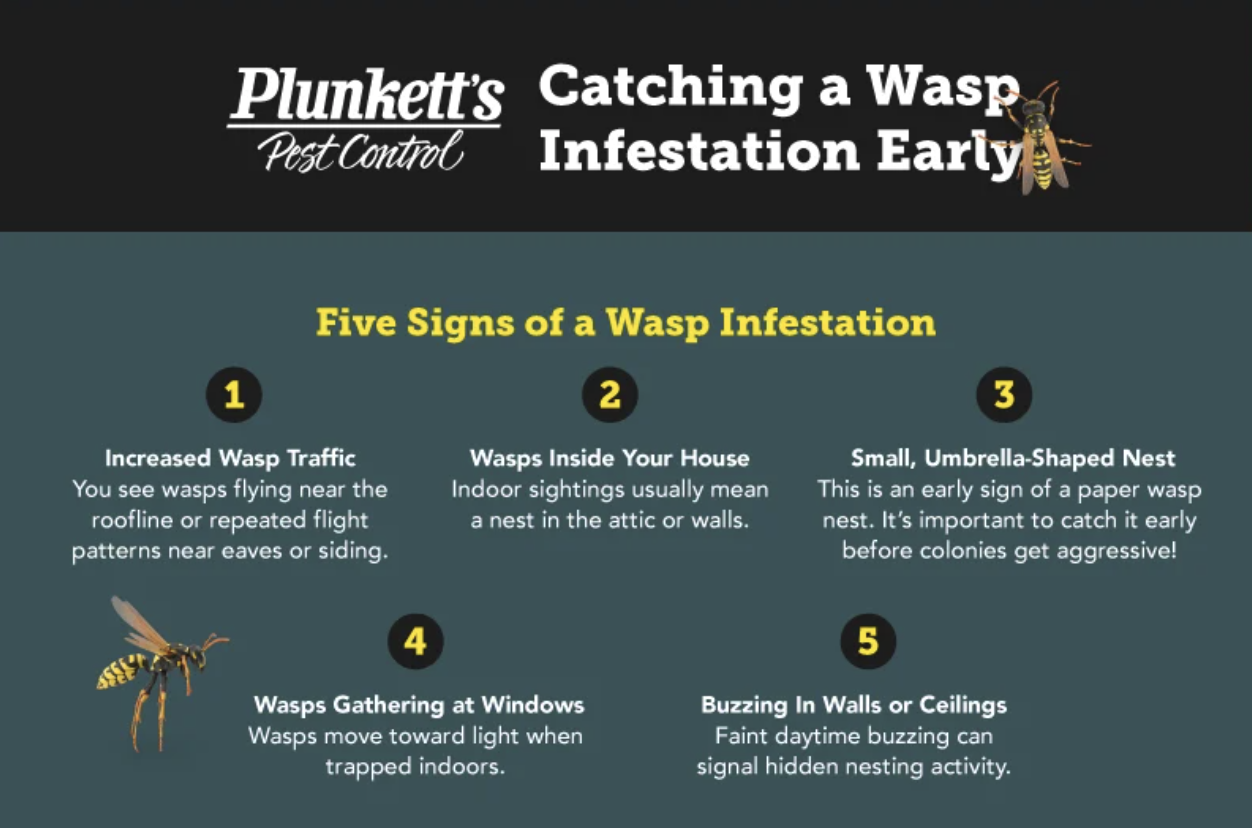
- Repeated wasp traffic to one spot, like under eaves or siding gaps
- Faint buzzing inside walls or ceilings
- A small, early-stage nest (sometimes no bigger than a golf ball)
- Wasps gathering near windows, trying to escape indoors
- A sudden jump in indoor sightings during late summer
Catching these signs early makes removal easier — don't wait until the colony grows into a larger, more defensive nest.
A wasp infestation rarely starts with a large, obvious nest. More often, it begins with subtle clues that many homeowners overlook until activity suddenly ramps up. Seeing a wasp here and there in your yard is not unusual. However, if you are noticing them repeatedly around windows, inside your home, or hovering near the roofline, that is often an early warning sign of a developing nest nearby.
Knowing what to watch for can make a significant difference. Here is how to recognize the early signs of wasp activity, understand where they may be getting in, and determine when it is time to contact a professional pest control company.
Early Signs of a Wasp Infestation
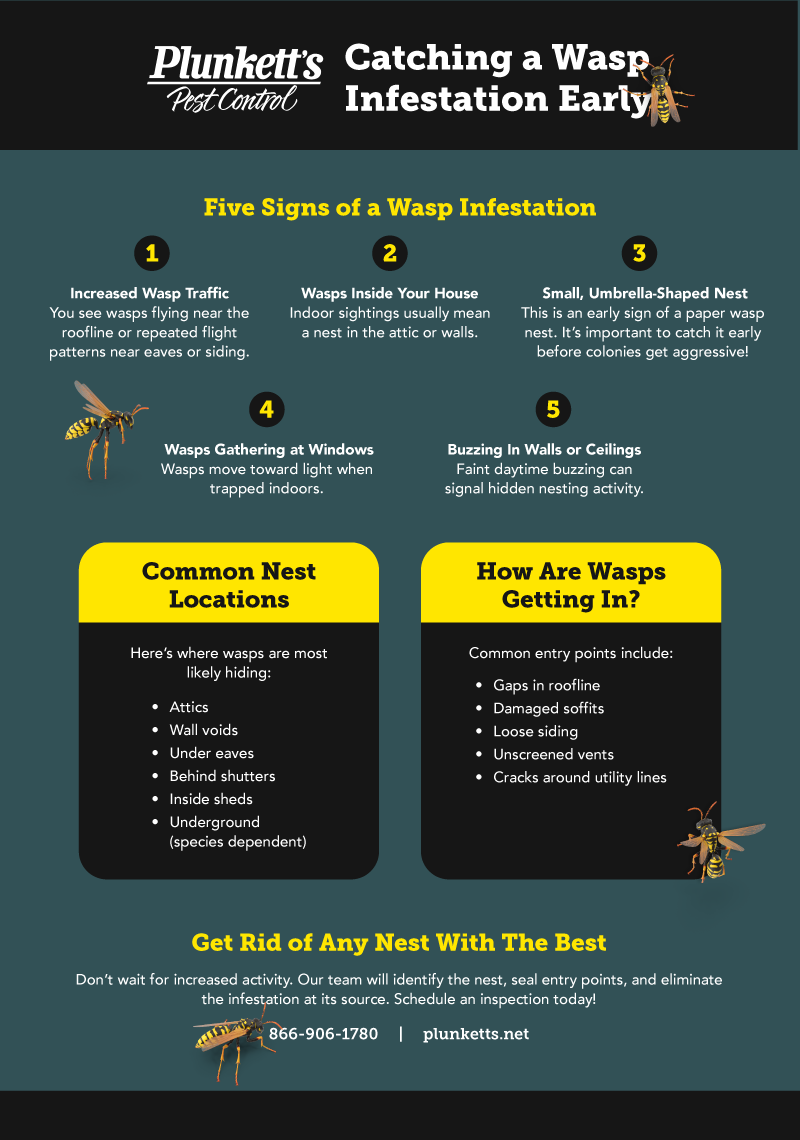
1. Increased Wasp Traffic Around Your Home
If you see wasps repeatedly flying to and from one specific area—under eaves, into siding gaps, or behind shutters—that’s a strong indication of a nest nearby.
2. Buzzing Inside Walls or Ceilings
A faint buzzing sound, especially during warm parts of the day, can signal a wasp nest in house wall cavities or attic spaces.
3. Visible Nest Formation
Early nests may be small, sometimes no bigger than a golf ball. Catching them at this stage makes removal much easier.
4. Wasps Gathering Near Windows
Wasps are attracted to light. If they’re appearing near windows inside, they may be trying to escape after emerging from a nest in your attic.
5. Sudden Indoor Activity in Late Summer
Late summer and early fall often bring peak wasp activity. If you’re suddenly seeing more wasps indoors, the colony may be expanding.
Types of Wasp Nests & Where They Can Be Found
Not all wasp nests look the same. Learn how to identify a wasp nest to understand which type of stinging insect you’re dealing with:
.jpg?r=hwE0k/k8Vso=)
- Umbrella-shaped
- Open comb structure (cells are visible from below)
- No outer papery shell
-
Usually built in exposed but sheltered areas such as:
- Under eaves and roof overhangs
- Porch ceilings
- Deck joists
- Railings
- Inside sheds or garages
Paper wasps prefer elevated areas that provide protection from rain and wind. Colonies are typically smaller than other wasp species, and while they will defend their nest, they’re generally less aggressive unless directly disturbed.
Enclosed Aerial Nests (Hornets & Some Yellowjackets)
.jpg?r=xLdRsCnNmRU=)
- Football-shaped
- Fully enclosed with a thick, papery outer covering
- Often gray or tan in color
-
Commonly found:
- Hanging from trees
- Under soffits or rooflines
- Attached to sheds or outbuildings
- Occasionally inside attics
These nests can grow quickly throughout the summer. Colonies are larger and significantly more defensive, especially as the season progresses. Disturbing one of these nests can result in multiple stings.
Ground Nests (Common with Yellowjackets)
.jpg?r=3F48xfcu8sI=)
- Built underground or in concealed voids
- Entrance hole may resemble a small rodent burrow
-
Often hidden in:
- Lawns
- Landscaping beds
- Mulch areas
- Along foundations
- Inside wall voids or behind siding
Ground nests are particularly dangerous because they’re easy to disturb accidentally while mowing or gardening. These colonies tend to be highly defensive and may swarm quickly if the nest is disrupted.
What Attracts Wasps to My House?
Understand what attracts wasps to prevent a small issue from turning into a full infestation:
Food Sources
Wasps are constantly hunting for sugar and protein. They are attracted to food scraps in outdoor trash cans, garbage or recycling bins, sugary drinks left uncovered, fallen fruit from trees, outdoor dining areas, and pet food left outside. Even small spills on decks or patios can attract scouting wasps, which then signal others from the colony.
Easy Nesting Locations
Wasps look for sheltered areas that protect their nests from wind and rain. Homes naturally provide ideal nesting structures. Once a queen identifies a protected space in spring, she can begin building a nest that expands rapidly throughout the summer.
Accessible Entry Points
Small cracks, gaps around vents, damaged screens, and openings in siding make it easier for wasps to move inside wall cavities or attics. Once inside, nests can grow unnoticed until activity increases.
.jpg?r=mZ+nh/Ot844=)
But How Are They Getting In My House?
Common pest entry points include:
- Gaps along rooflines
- Damaged soffits
- Loose siding
- Cracks in foundation
- Attic vents without proper screening
Even a gap the width of a pencil can allow wasps inside. Once inside, they may build nests in insulation, between studs, or along rafters.
What to Do If You Suspect a Wasp Infestation
If you know you’ve got a wasp infestation or you’re seeing possible signs:
- Do not attempt to knock down or spray a nest without proper equipment.
- Avoid sealing entry points while wasps are active inside.
- Monitor activity to determine traffic patterns.
- And most importantly, contact a professional pest control team.
The Importance of Acting Fast
Waiting too long to address a wasp problem can allow the colony to grow significantly. What starts as a small nest in spring can expand into a large, defensive colony by late summer. The longer a nest remains active, the greater the risk of accidental disturbance, multiple stings, and wasps entering your living spaces.
In some cases, nests hidden inside wall voids or attics can cause structural concerns if left untreated. Increased activity indoors often means the colony has already grown beyond the early stages.
Professional Wasp Control You Can Rely On
At Plunkett’s, our technicians identify entry points, locate hidden nests, and apply targeted treatments designed to eliminate the colony at its source. Don’t risk stings or a returning infestation, get in touch with Plunkett’s today!