
Blog Summary
Mice keep coming back to your home because there are open entry points, easy food sources, and a warm place to nest. Traps can catch the mice already in your home, but they don’t seal entry points or slow reproduction, so new mice move in to replace the ones you catch. Stopping a mouse infestation for good takes exclusion, sanitation, and ongoing monitoring.
You set a trap, you catch a mouse, and for a few days the house is quiet. Then the scratching in the walls starts again. If that cycle sounds familiar, you’re not alone. Mouse problems are one of the most common issues our technicians see in fall and winter. Here’s why mice keep returning, why your rodent trap may not be doing the job, and what it takes to keep them out long term.
Why Do I Keep Getting Mice in My House?
If you’ve caught mice before and they keep showing up, your home is likely still offering what attracted them. These are the most common reasons mice return:
- Your home is warm and sheltered. As temperatures drop, mice look for protected spaces to nest. Wall voids, attics, basements, and garages are all ideal spots.
- Food sources are easy to reach. Mice don’t need much to survive. Crumbs under appliances, pet food left out overnight, birdseed in the garage, and pantry goods in paper or cardboard packaging can all keep a mouse fed.
- Entry points are still open. Whatever gaps let the first mouse in will let the next one in too. Catching mice without sealing those openings leaves the door open for a steady stream of new ones.
- Mice leave trails for other mice. Mice mark their travel routes with urine and droppings. Those scent trails can lead other mice to the same food and shelter, even after the original mice are gone.
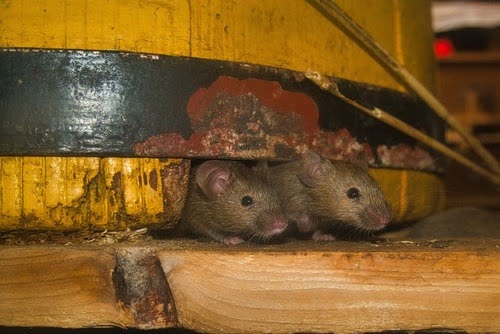
Unfortunately, it’s easy for mice to get inside. They can squeeze through a gap about a quarter inch wide (roughly the width of a pencil). They commonly enter through gaps around utility lines, foundation cracks, worn door sweeps and garage door seals, and openings near vents and rooflines.
I’ve Placed Mouse Traps but I Still Have a Mouse Problem
How Do Mouse Traps Work?
Every mouse trap works by luring a mouse to a specific spot and then capturing or killing it once it gets there. There are several types of mouse traps, and the difference between them comes down to how they do that.
Types of Mouse Traps
- Snap traps: The classic design. A spring-loaded bar is held back by a trigger plate. When a mouse pushes on the bait or the trigger, the bar snaps shut.
- Electronic traps: An enclosed, battery-powered chamber. When a mouse steps inside, it completes a circuit and receives a high-voltage shock.
- Glue traps: Flat boards coated in strong adhesive. Mice get stuck when they walk across them. Many homeowners find these unpleasant to deal with, since the mouse is often still alive when the trap is found.
- Live-catch traps: Boxes with a one-way door that lets a mouse in but not out. These only help if the mouse is released far enough away that it won’t find its way back.
- Bait stations: Locked, tamper-resistant stations that hold rodenticide. These are best placed and monitored by a licensed pest control professional who knows where to put them and how to keep them out of reach of kids and pets.
What Are the Most Effective Mouse Traps?
For homeowners, snap traps and electronic traps tend to be the most reliable options. Still, the most effective mouse traps come down to placement and quantity more than brand or design. Even a well-placed trap can only catch the mice that are already inside. Traps only deal with the mice you can see, not the reason they showed up in the first place.
Why Your Mouse Traps Aren’t Working
Mouse traps not working? Snap traps not working even though the bait keeps disappearing? One or more of these issues is likely the cause:
- The traps are in the wrong spot. Mice rarely run across open floors. They travel along walls and behind furniture and appliances. Place traps flush against the wall, perpendicular to it, with the trigger end facing the baseboard.
- There aren’t enough traps. One or two traps won’t keep up with an active population. Set several traps a few feet apart in areas where you see droppings or gnaw marks.
- There’s too much bait. A large glob of peanut butter lets a mouse eat around the edges without triggering the trap. A pea-sized amount pressed into the trigger works better.
- Mice have better food options. If there’s an open bag of dog food nearby, the bait on your trap isn’t very tempting. Remove competing food sources before setting traps.
- The mice have become trap-shy. A mouse that escapes a trap that misfires may start avoiding traps altogether. Handling traps with bare hands can also leave a scent mice notice, so wear gloves when setting them.
- There are more mice than you think. If you’re seeing one mouse, there are likely others you’re not seeing.
Do Mice Go Away on Their Own?
No. Once mice find steady access to food, water, and shelter, they have no reason to leave. A heated home with a stocked pantry gives them everything they need to stay through the winter and beyond.
Mice also reproduce quickly. A female house mouse can have a new litter roughly every three weeks, and her young can start breeding within about two months. That means a couple of mice in the fall can become a full mouse infestation by spring. Waiting it out almost always makes the problem bigger, not smaller.
How to Stop Mice From Coming Back
Breaking the cycle means making your home harder to enter and less rewarding once mice get inside. Start with these steps:
- Seal entry points. Fill small gaps with steel wool and caulk, cover larger openings with hardware cloth, and install door sweeps on exterior doors. Avoid using expanding foam alone, since mice can chew through it.
- Store food in sealed containers. Move pantry staples, pet food, and birdseed into hard plastic, glass, or metal containers with tight lids.
- Clean up crumbs and spills. Pay extra attention to areas behind and under appliances, where crumbs collect and mice feel hidden.
- Reduce clutter. Swap cardboard boxes for plastic bins in basements, attics, and garages, since cardboard makes easy nesting material.
- Manage the outside of your home. Trim shrubs and branches away from the house, keep firewood stacked away from exterior walls, and keep trash cans tightly lidded.
When to Call for Mouse Pest Control
If mice keep showing up after you’ve taken preventative steps, a pest control professional can stop the problem at the source. A Plunkett’s technician will find how mice are getting in, seal entry points, place traps and tamper-resistant bait stations, and follow up until the problem is resolved.
With more than 100 years of experience, Plunkett’s knows how to get rid of your mouse infestation. Contact Plunkett’s Pest Control today for effective mouse pest control.