Blog Summary
Getting rid of a spider infestation starts with cutting off what attracts them: food and shelter. Effective steps include:
- Sealing cracks and gaps around doors, windows, and the roofline
- Vacuuming up webs, egg sacs, and spiders regularly
- Keeping basements and other damp areas clean and clutter-free
- Using natural deterrents like peppermint or tea tree oil
- Setting sticky traps to catch stragglers
For larger or recurring infestations, a professional treatment addresses both the spiders and what's drawing them indoors.
The bad news: You've got spiders in your house.
The good news: They're probably not venomous. Still, that doesn't mean you want them in your home.
Spiders can lay 100s of eggs at a time, which is why it's important to act quickly with a spider treatment plan that addresses an infestation before it happens.
At Plunkett's, we know how to get rid of spiders in the basement, garage, attic, or wherever they've decided to spin their webs. Contact us today to stop the spider invasion in your home or keep reading to learn more DIY solutions.
What are the Signs of a Spider Infestation in My House?
The signs of a spider infestation are relatively straightforward:
- Increased Webs: Every basement has a web or two. However, if you notice an increase in the amount of spider webs in your home—especially in areas where you don't normally see them—you may have an infestation. Keep in mind that some species of spider make small funnel shaped webs vs the typical ringed web.
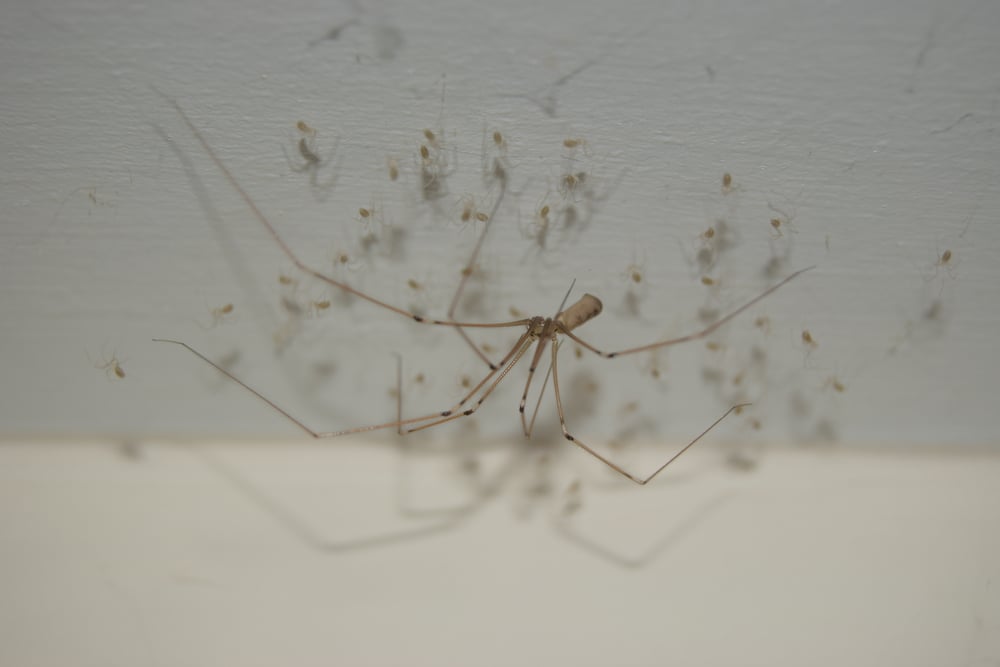
- Egg Sacs: Egg sacs are tiny silk-wrapped balls. They can hold anywhere from 2-200 baby spiders and are usually laid in dark, quiet places.
- Flying Insects: Increased bug traffic in your home could be a calling card to local spiders that the buffet is open. Stop these other pests to prevent spiders from becoming another pest issue in your home.
- Humidity: Spiders prefer dark, moist areas. In fall, when weather becomes cooler and drier, spiders are likely to move to a more comfortable and appealing environment, such as an attic, crawl space, or basement.
- Spider Bites: Spiders bite in self-defense. You may unknowingly be bitten when you reach into a closet or cupboard where a spider is hiding.
What Kind of Spider Do I Have in My House?
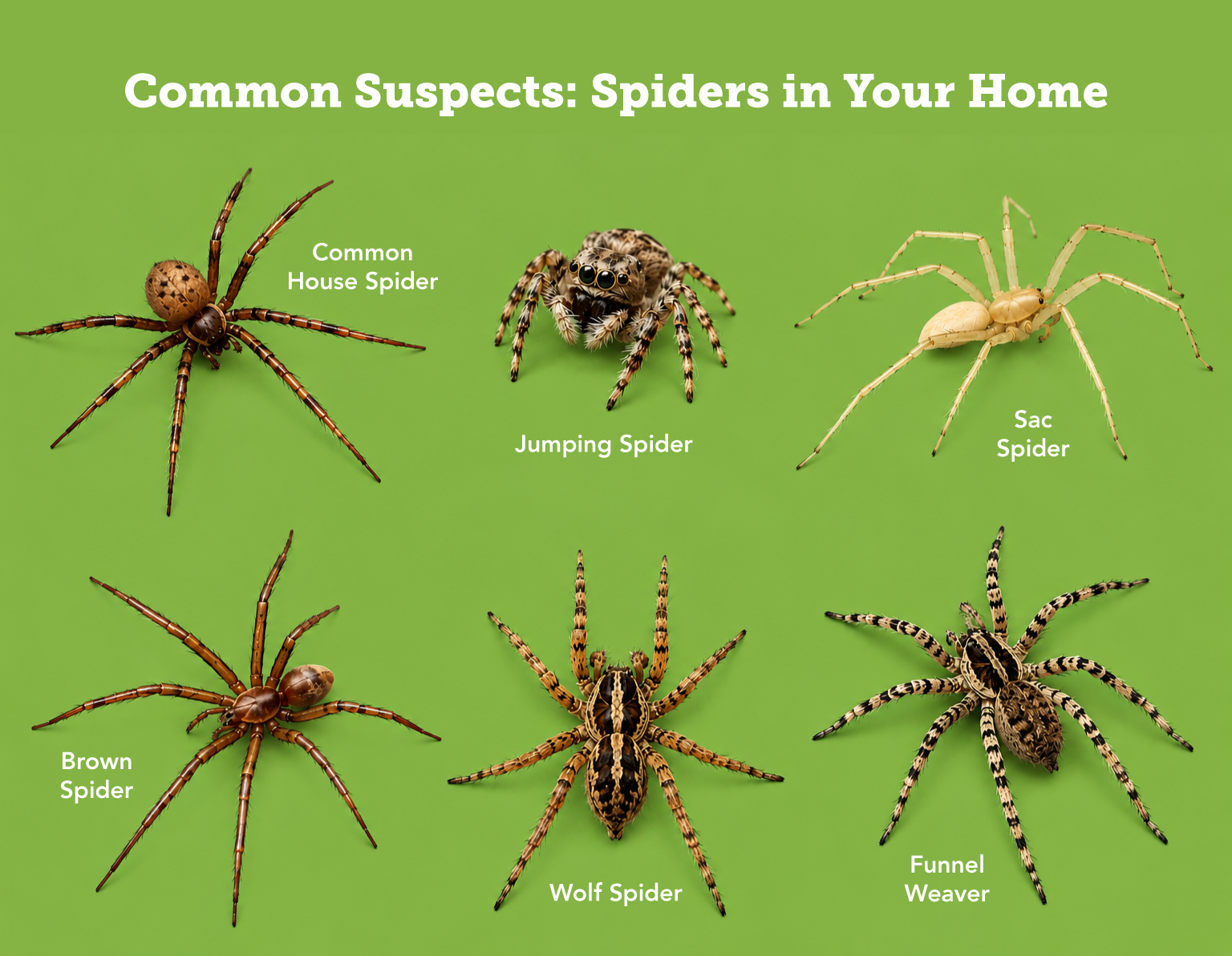
North America is home to roughly 3,000 species of spiders, but you don't need to worry about most of them. Only a handful regularly turn up inside homes:
- Common House Spider: The most frequently spotted spider indoors, building messy, irregular webs in corners, closets, and basements.
- Jumping Spider: Small, stocky, and quick to hop rather than crawl. Jumping spiders are curious but rarely bite.
- Sac Spider: Pale and slender, sac spiders build small silk sacs in ceiling and wall corners and are quicker to bite than most house spiders.
- Brown Spider: Light to medium brown with long, thin legs, brown spiders are common wanderers that often turn up in basements and garages.
- Wolf Spider: Large, hairy, and fast-moving. Wolf spiders don't spin webs. Instead, they hunt on the ground and often wander in from outside.
- Funnel Weaver: Named for the funnel-shaped webs they build in grass, shrubs, and window wells, funnel weavers sometimes head indoors when the weather turns cold.
How Do I Get Rid of a Spider Infestation?
Spiders enter your home for two reasons: food and shelter. If you deprive spiders of these two things, it's likely they'll find somewhere else to set up shop. Here are some simple steps you can take to make your lodgings less appealing to common house spiders:
1. Repair Cracks & Holes
Spiders can squeeze through the tiniest crack. Check your home periodically and fill in places where foundations have cracked, doors have shifted, and small gaps have appeared. This goes for your roof as well. Spiders are adept climbers that can access your upper floors via tree branches. Be sure to repair screens on doors and windows at all levels.

2. Vacuum
Your vacuum cleaner is an effective tool against spiders. Vacuuming up webs, egg sacs, and even spiders, prevents them from becoming embedded and increasing their numbers.
3. Check Your Basement
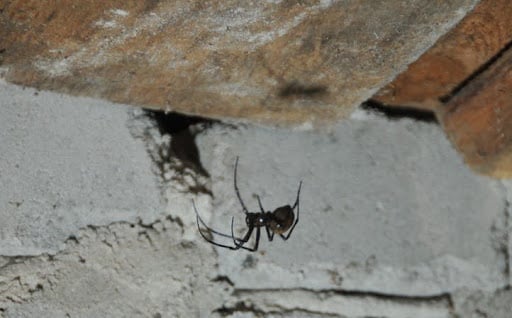
Because they are quiet, dark, and damp, basements are the most common places to find spiders. Don't overlook your basement the next time you clean your home; spider prevention starts from the bottom up.
4. Keep Your Home Clean
Like vacuuming, a clean home discourages spiders from becoming too cozy. They prefer unkempt environments where they can easily disappear into the clutter and where there are plentiful other pests to feast on. A clean home has little to offer spiders.
5. Place Sticky Traps
Sticky traps, also called glue traps, capture spiders and other crawling insects that wander across them. They won't solve a larger infestation on their own, but they're a useful way to monitor activity and catch stragglers. Just be ready to check and replace them regularly.
6. Professional Spider Control
The fool-proof way to keep spiders out of your space is to hire a professional pest control team. DIY methods can work. However, it's often easiest to let the professionals determine how to deal with a spider infestation. We can accurately identify the type of spiders, where they're getting in, where they're hiding, and how to eliminate them.
Keep Spiders Out of Your Home With Plunkett's
Whether you have just a few tiny house spiders or a full infestation, contact Plunkett's today for fast and effective pest control solutions. This includes exterior and interior treatments to secure your home. We keep pests in their place, not yours.